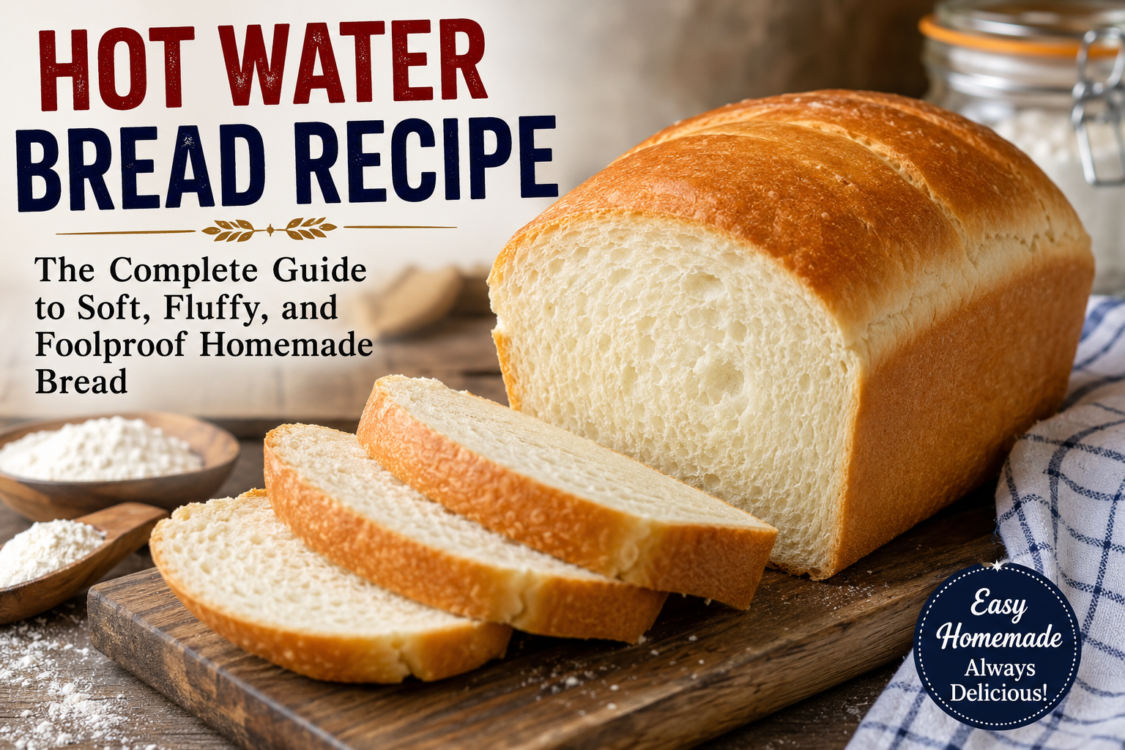

There is something deeply satisfying about baking fresh bread from scratch, especially when the process is simple and consistently produces excellent results. A hot water bread recipe is one of the most reliable methods for creating soft, tender loaves with a delicate crumb and exceptional freshness. Whether you are an experienced baker or trying homemade bread for the first time, this technique delivers dependable results with everyday ingredients.
Unlike many traditional bread methods, using hot water helps activate ingredients efficiently while creating an ideal environment for gluten development and moisture retention. This guide explains every aspect of the process, from selecting ingredients to troubleshooting common issues, ensuring you can confidently master this timeless baking technique.
Why a Hot Water Bread Recipe Works So Well
A well-made hot water bread recipe relies on warm—not boiling—water to encourage proper yeast activity and create a dough that is easy to handle. The warmth also helps dissolve sugar and distribute ingredients more evenly, supporting consistent fermentation throughout the dough.
The result is bread with a soft interior, a lightly golden crust, and excellent shelf life. Because the dough retains moisture effectively, slices remain tender for sandwiches, toast, dinner rolls, or homemade garlic bread long after baking.
Understanding the Essential Ingredients
Every successful loaf begins with quality ingredients. Bread flour offers additional protein for stronger gluten development, while all-purpose flour creates a slightly softer texture. Active dry yeast or instant yeast, sugar, salt, butter or oil, and properly heated water each contribute to the dough’s final structure and flavor.
Although ingredient lists appear simple, each component performs a precise role. Salt strengthens gluten and balances flavor, fat creates tenderness, sugar feeds yeast during the initial rise, and warm water provides the environment needed for steady fermentation without damaging the yeast cells.
The Ideal Water Temperature for Bread Dough
One of the biggest misconceptions is that hotter water speeds up baking success. In reality, excessively hot water can destroy yeast, preventing proper fermentation and resulting in dense bread. For the best hot water bread recipe, aim for water between 110°F and 115°F (43°C to 46°C).
Using a kitchen thermometer removes the guesswork and improves consistency. If you do not have one, the water should feel comfortably warm rather than hot against your wrist, similar to warm bath water rather than freshly boiled water.
Step-by-Step Method for Perfect Bread
Begin by combining warm water, sugar, and yeast until the mixture becomes foamy. Add softened butter or oil, then incorporate salt and flour gradually while mixing until a soft dough forms. Knead until the surface becomes smooth, elastic, and slightly tacky rather than sticky.
Allow the dough to rise until doubled in size before gently shaping it into a loaf or rolls. After the second rise, bake until golden brown and the loaf sounds hollow when tapped underneath. Cooling completely before slicing helps preserve the crumb and prevents excess moisture loss.
Common Mistakes and How to Avoid Them
Many failed loaves are caused by rushing the fermentation process. Bread requires adequate time for yeast to produce carbon dioxide, which creates the airy texture people expect from a quality hot water bread recipe. Skipping rise times almost always leads to dense results.
Adding too much flour is another common issue. The dough should remain soft and flexible throughout kneading. Resist the temptation to continue adding flour simply because the dough feels slightly sticky during the early mixing stages.
Ingredient Breakdown for Better Results
Understanding how each ingredient affects the finished loaf makes it easier to customize recipes while maintaining excellent structure and texture.
| Ingredient | Primary Function | Baking Benefit | Practical Tip |
|---|---|---|---|
| Bread flour | Builds gluten | Better structure and chew | Ideal for sandwich loaves |
| Warm water | Activates yeast | Even fermentation | Keep between 110°F and 115°F |
| Yeast | Creates rise | Light, airy crumb | Check freshness before use |
| Sugar | Feeds yeast | Improved browning | Small amounts are sufficient |
| Salt | Strengthens dough | Better flavor and texture | Never add directly onto dry yeast |
| Butter or oil | Adds richness | Softer crumb | Melt or soften before mixing |
This balance explains why even small adjustments influence the final loaf. Learning the purpose of each ingredient allows bakers to troubleshoot confidently and adapt recipes without sacrificing quality.
Tips for Achieving Bakery-Quality Texture
Proper kneading develops gluten strands that trap gas during fermentation, creating the soft interior associated with premium homemade bread. Whether kneading by hand or using a stand mixer, stop once the dough stretches smoothly without tearing easily.
Humidity, room temperature, and flour type also influence the dough. On humid days you may need slightly less flour, while colder kitchens often require longer proofing times. Paying attention to the dough instead of the clock produces consistently better bread.
“Great bread comes from understanding your dough, not simply following a timer.”
This simple principle reminds bakers that observation often matters more than rigid measurements.
Choosing the Right Flour for Every Purpose
Bread flour remains the preferred choice because its higher protein content creates stronger gluten networks. This structure produces slices that hold together well for sandwiches while maintaining softness inside.
All-purpose flour is still an excellent option for many home bakers. It creates a slightly lighter crumb and works beautifully for dinner rolls, family loaves, and everyday baking when bread flour is unavailable.
Flavor Variations to Customize Your Bread
One advantage of a hot water bread recipe is its versatility. Fresh herbs, roasted garlic, shredded cheese, honey, oats, seeds, or dried herbs can all be incorporated without dramatically changing the overall preparation method.
Sweet versions also perform exceptionally well. Cinnamon, raisins, vanilla, or a touch of maple syrup create breakfast bread with minimal adjustments, allowing one dependable base recipe to serve multiple purposes throughout the week.
Storage and Freezing Techniques
Fresh bread stays soft for several days when stored in an airtight container or bread bag at room temperature. Avoid refrigeration whenever possible because it accelerates starch retrogradation, causing bread to become stale more quickly.
For longer storage, freeze sliced bread in freezer-safe bags. Individual slices thaw rapidly and retain much of their original texture, making homemade bread almost as convenient as store-bought alternatives while preserving superior flavor.
Nutritional Considerations and Homemade Advantages
Preparing bread at home provides complete control over ingredients. Many commercial loaves contain preservatives, conditioners, and additional sweeteners that are unnecessary for a quality hot water bread recipe made from scratch.
Home bakers can also adjust sodium, substitute whole wheat flour for a portion of the white flour, or incorporate seeds for additional fiber and nutrients. These simple modifications create bread that better aligns with individual dietary preferences without compromising taste.
Practical Baking Scenarios for Everyday Success
Imagine preparing dough on a quiet weekend morning. While the bread rises naturally, you complete household tasks, returning periodically to shape and bake the loaf. The aroma filling the kitchen becomes part of the experience, transforming ordinary ingredients into something memorable.
The same technique works equally well for family dinners, holiday meals, sandwich preparation, and meal planning. Once mastered, a dependable hot water bread recipe becomes less of a recipe and more of a foundational kitchen skill that supports countless homemade meals.
Conclusion
A reliable hot water bread recipe combines simplicity with exceptional results. By understanding proper water temperature, ingredient balance, gluten development, and fermentation, anyone can produce soft, flavorful homemade bread with confidence. Rather than relying on complicated techniques, success comes from consistency, patience, and attention to detail.
Whether you bake weekly or only on special occasions, mastering this method provides lasting value. Fresh bread made from quality ingredients offers superior flavor, customizable nutrition, and the satisfaction that comes from creating something remarkable with your own hands.
FAQ
What makes a hot water bread recipe different from regular bread recipes?
A hot water bread recipe uses properly warmed water to activate yeast efficiently and create a soft, moist dough that bakes into tender, fluffy bread.
Can I use all-purpose flour in a hot water bread recipe?
Yes. All-purpose flour works well, although bread flour generally provides stronger gluten development and a slightly chewier texture.
Why didn’t my bread rise properly?
The most common causes include expired yeast, water that was too hot or too cold, insufficient proofing time, or adding excessive flour during mixing.
Can I freeze bread made with a hot water bread recipe?
Absolutely. Slice the loaf before freezing, store it in airtight freezer bags, and thaw slices individually for the best convenience and texture.
How long does homemade bread stay fresh?
Most loaves remain fresh for two to four days at room temperature when stored properly. Freezing extends freshness significantly without sacrificing quality.
Can I make dinner rolls instead of a loaf?
Yes. The same hot water bread recipe can easily be shaped into rolls, buns, or smaller artisan-style loaves with only minor adjustments to baking time.
Read More: AP Calculus BC FRQ 2016: Complete Guide, Solutions, Scoring Tips, and Exam Strategy