
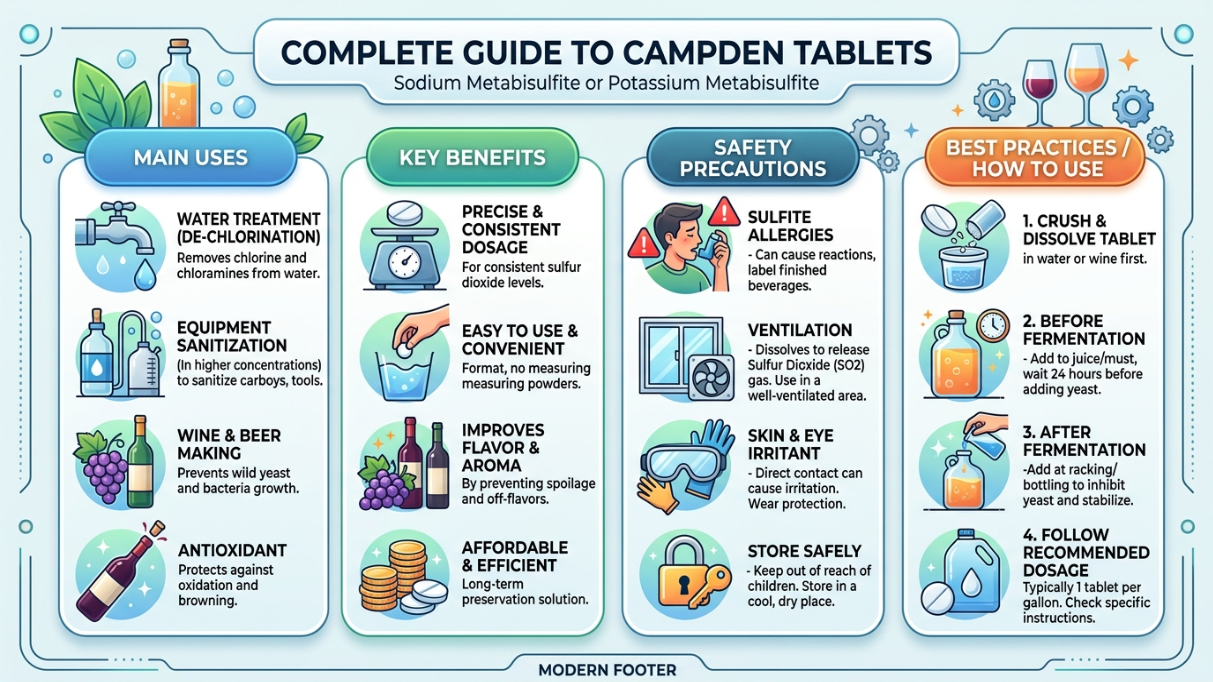

Campden tablets are one of the most valuable yet often misunderstood tools in home brewing, winemaking, cider production, and water treatment. Whether you’re preparing fruit for fermentation, removing chlorine from brewing water, or protecting wine from unwanted oxidation, understanding how these tablets work can dramatically improve your results.
Used correctly, campden tablets help preserve flavor, reduce contamination risks, and create a healthier environment for yeast during fermentation. This comprehensive guide explains what they are, how they function, when to use them, and the best practices that experienced brewers and winemakers rely on.
What Are Campden Tablets?
Campden tablets are small compressed tablets made primarily from either sodium metabisulfite or potassium metabisulfite. When dissolved in water or juice, they release sulfur dioxide (SO₂), a compound widely used in food and beverage production for its antimicrobial and antioxidant properties.
The primary purpose of campden tablets is to sanitize must, juice, cider, wine, and brewing water without relying on heat. They help suppress unwanted microorganisms while protecting delicate flavors and aromas throughout the production process.
How Campden Tablets Work
When dissolved, the tablets release sulfur dioxide, which temporarily inhibits wild yeast, bacteria, and molds. This creates a controlled environment where cultured brewing or winemaking yeast can establish itself without excessive competition.
Beyond sanitation, campden tablets also slow oxidation. Oxygen exposure can dull aromas, darken color, and shorten shelf life, making sulfite protection an important step for many beverage makers seeking consistent quality.
“Good fermentation begins long before yeast is added—it begins with controlling the environment.”
Common Uses for Campden Tablets
Home winemakers commonly treat freshly crushed fruit with Campden tablets before fermentation. Allowing the sulfite to work for approximately 24 hours reduces unwanted microbes while giving selected yeast strains the best possible start.
Brewers frequently use campden tablets to neutralize chlorine and chloramine in municipal water supplies. These disinfectants can create medicinal or plastic-like off-flavors, making water treatment one of the simplest upgrades for better beer.
Sodium vs. Potassium Campden Tablets
Although both versions perform similar functions, they are not identical. Sodium metabisulfite introduces a small amount of sodium, while potassium metabisulfite contributes potassium instead.
Most modern winemakers prefer campden tablets made from potassium metabisulfite because they avoid increasing sodium levels in finished wine. For brewing water treatment, either version generally performs effectively when used correctly.
| Feature | Sodium Metabisulfite | Potassium Metabisulfite |
|---|---|---|
| Main mineral added | Sodium | Potassium |
| Common use | Water treatment | Winemaking |
| Flavor impact | Minimal | Minimal |
| Preferred by winemakers | Less common | Yes |
| Brewing suitability | Excellent | Excellent |
| Long-term storage stability | High | High |
| Typical sulfur dioxide release | Comparable | Comparable |
Benefits of Using Campden Tablets
One of the biggest advantages is improved microbial control. Wild organisms naturally found on fruit or equipment can introduce unpleasant flavors, spoilage, or inconsistent fermentation if left unmanaged.
Another important benefit of campden tablets is oxidation protection. Sulfites help preserve freshness, maintain color stability, and protect delicate fruit aromas throughout aging and storage, particularly in wines intended for extended cellaring.
Campden Tablets in Home Brewing
Water quality has a significant influence on beer flavor. Chlorine and chloramine are designed to disinfect drinking water, but they can react with malt compounds to create chlorophenols, producing harsh medicinal characteristics.
Adding campden tablets before brewing quickly removes these compounds with minimal effort. Many experienced home brewers consider this one of the highest-value improvements available because it addresses flavor problems before brewing even begins.
Campden Tablets in Winemaking
Fresh fruit naturally carries wild yeast, bacteria, and environmental microorganisms. While some traditional producers embrace spontaneous fermentation, most home winemakers seek greater consistency and predictability.
Treating crushed fruit with campden tablets allows undesirable organisms to decline before cultured wine yeast is introduced. This process encourages cleaner fermentation, improved aroma retention, and greater confidence in the finished product.
Using Campden Tablets Correctly
Dosage depends on the intended application, product volume, and sulfite concentration desired. Manufacturers provide guidance for wine, cider, brewing water, and juice preparation, making label instructions the best starting point.
Overusing campden tablets may temporarily inhibit fermentation or contribute excessive sulfite levels. Measuring carefully and allowing appropriate waiting times before pitching yeast ensures optimal performance without unnecessary complications.
Safety Considerations
For most people, sulfites are considered safe when used within established food production guidelines. They have been used commercially for decades to preserve beverages and reduce spoilage.
However, some individuals have sulfite sensitivity, particularly those with certain forms of asthma. When handling campden tablets, avoid inhaling dust, store them in a dry location, and follow manufacturer recommendations for safe use.
Common Misconceptions About Campden Tablets
A widespread myth suggests that Campden tablets sterilize everything instantly. In reality, they significantly reduce microbial populations but do not guarantee complete sterilization under every circumstance.
Another misconception is that campden tablets permanently stop fermentation. Their antimicrobial effect is temporary, allowing cultured yeast to thrive once sulfur dioxide levels naturally decline after the recommended waiting period.
Best Practices for Consistent Results
Successful fermentation depends on more than sulfites alone. Clean equipment, quality ingredients, healthy yeast, temperature control, and proper oxygen management all contribute to superior beverages.
Experienced producers use campden tablets as one component of an integrated quality strategy rather than a standalone solution. Combining sanitation, careful measurements, and good fermentation practices consistently produces better outcomes.
Trends in Modern Home Fermentation
The popularity of home brewing, natural cider, fruit wines, and small-batch fermentation continues to grow. Alongside this trend, hobbyists increasingly seek professional-level techniques once limited to commercial producers.
Modern education has helped users understand that campden tablets are not shortcuts but precision tools. Better knowledge of water chemistry, yeast health, and oxidation management has elevated the overall quality of homemade beverages worldwide.
Conclusion
Campden tablets remain one of the most practical and cost-effective tools available for brewers, winemakers, and cider makers. Their ability to reduce unwanted microorganisms, eliminate chlorine, protect against oxidation, and improve fermentation reliability makes them an essential part of many successful production processes.
Whether you’re producing your first batch or refining years of experience, understanding how and when to use campden tablets can significantly improve consistency, flavor, and product stability. Combined with proper sanitation, quality ingredients, and careful fermentation management, they provide a strong foundation for producing beverages that meet professional standards.
FAQ
What are campden tablets used for?
Campden tablets are commonly used to remove chlorine from brewing water, suppress wild microorganisms in fruit juice, and protect wine or cider from oxidation during production and storage.
Are campden tablets safe to use?
Yes. When used according to manufacturer recommendations, campden tablets are considered safe for brewing and winemaking. People with sulfite sensitivity should exercise additional caution.
Do campden tablets stop fermentation?
No. Campden tablets temporarily inhibit unwanted microorganisms. After sulfur dioxide levels decrease, cultured yeast can ferment normally when added at the recommended time.
Can campden tablets remove chloramine from water?
Yes. One of the most popular uses for campden tablets is neutralizing chlorine and chloramine in municipal water before brewing, helping prevent undesirable off-flavors.
Should I use sodium or potassium campden tablets?
Potassium metabisulfite versions are generally preferred for winemaking because they avoid adding sodium, while both types of campden tablets are effective for many brewing and water treatment applications.
How should campden tablets be stored?
Store campden tablets in a tightly sealed container in a cool, dry location away from moisture and direct sunlight to preserve their effectiveness over time.
Read More: WASSCE 2019 Government Questions: Complete Guide, Analysis, Answers, and Exam Preparation Tips