

Have you ever wondered what is the skin on a sausage made of? Whether you’re grilling bratwurst, slicing salami, or enjoying breakfast sausages, the outer layer plays a much bigger role than most people realize. The casing doesn’t simply hold the meat together—it influences texture, cooking performance, appearance, shelf life, and even the eating experience.
Understanding what is the skin on a sausage made of helps consumers make informed choices while appreciating the craftsmanship behind traditional and modern sausage production. From centuries-old natural casings to innovative collagen and cellulose alternatives, today’s sausage industry offers several options designed for different products, cooking methods, and consumer preferences.
Understanding What Is the Skin on a Sausage Made Of
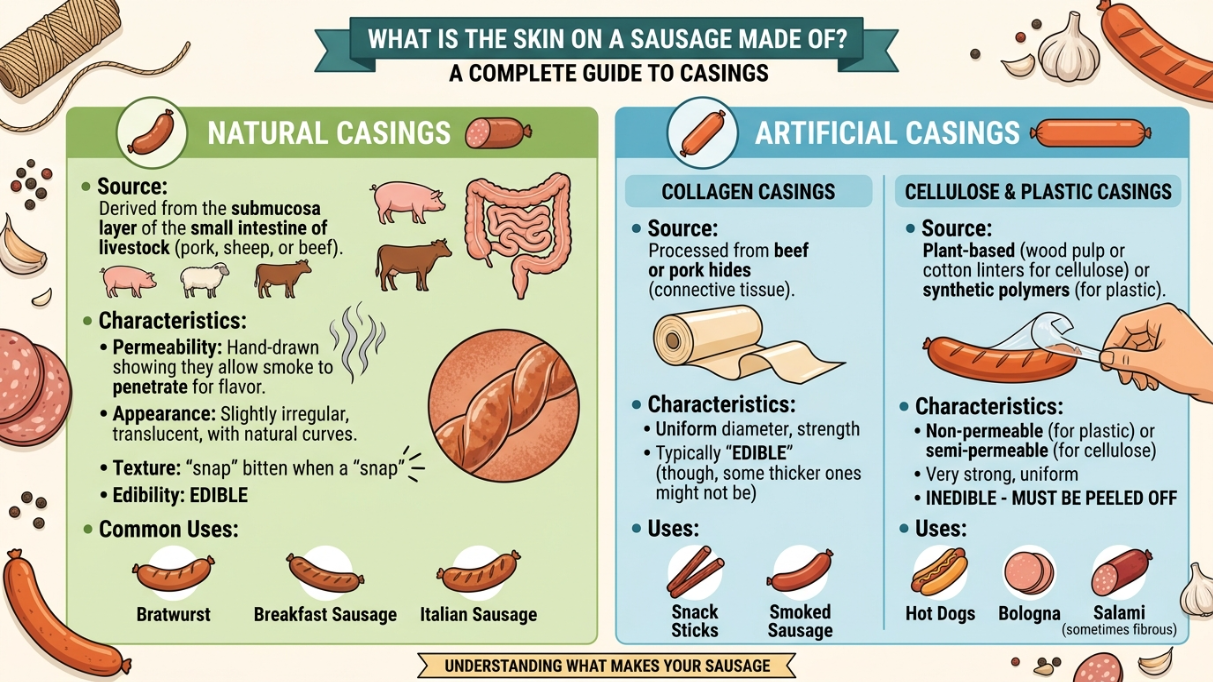
The answer to what is the skin on a sausage made of depends entirely on the type of sausage being produced. Modern manufacturers typically use natural casings, collagen casings, cellulose casings, or plastic casings, each designed for specific production needs and desired eating characteristics.
Natural casings remain the traditional standard and are produced from carefully cleaned animal intestines, primarily from pigs, sheep, and cattle. Artificial alternatives, meanwhile, are engineered from collagen, plant fibers, or food-safe synthetic materials to provide greater consistency, efficiency, and specialized performance in commercial manufacturing.
Why Sausage Casings Matter More Than You Think
Many people assume the casing simply keeps the meat inside, but it performs several essential functions throughout production and cooking. It shapes the sausage, protects the filling, allows controlled moisture exchange, and contributes significantly to the familiar “snap” associated with premium sausages.
When exploring what is the skin on a sausage made of, it becomes clear that the casing also influences smoking, fermentation, drying, and flavor development. A properly selected casing ensures the sausage cooks evenly while maintaining its intended texture and appearance from production to the dinner table.
Natural Casings Explained
Natural casings are made from the submucosa layer of animal intestines after extensive cleaning, processing, and preservation. This layer is exceptionally strong, flexible, and naturally permeable, making it ideal for fresh, smoked, and cured sausages across countless culinary traditions.
For anyone asking what is the skin on a sausage made of, natural casings often represent the highest-quality answer for premium products. Their ability to expand during cooking while delivering an authentic bite makes them the preferred choice for traditional bratwurst, Italian sausage, chorizo, and many artisanal specialties.
Collagen Casings and How They Are Made
Collagen casings are manufactured using collagen extracted primarily from the hides of cattle. The purified collagen is processed into uniform tubes that closely resemble natural casings while offering superior consistency for automated production lines.
When discussing what is the skin on a sausage made of, collagen deserves special attention because it bridges tradition and technology. Edible collagen casings are commonly used for breakfast sausages and snack sticks, while thicker non-edible versions are used for larger cured meats that require peeling before consumption.
Cellulose Casings in Commercial Production
Cellulose casings originate from plant fibers, typically wood pulp or cotton linters, which are processed into durable, uniform tubes. These casings are especially popular for producing hot dogs and frankfurters because they maintain consistent diameter during cooking and smoking.
Unlike edible casings, cellulose is removed after cooking, leaving behind the familiar skinless hot dog. Understanding this distinction is important when considering what is the skin on a sausage made of, since consumers often never see the casing that shaped the finished product.
Plastic Casings and Their Specialized Uses
Plastic casings are produced from food-safe synthetic materials designed to provide exceptional moisture and oxygen barriers. They are commonly used for deli meats, liver sausage, bologna, and products requiring extended shelf life rather than direct consumption.
These casings are never intended to be eaten and are removed before serving. Although they differ dramatically from natural options, they demonstrate that the answer to what is the skin on a sausage made of depends heavily on the intended product, manufacturing process, and storage requirements.
Comparing the Different Types of Sausage Casings
Different casing materials offer distinct advantages depending on the product being manufactured. The following comparison highlights their primary characteristics.
| Casing Type | Primary Material | Edible | Best Used For | Texture | Typical Products |
|---|---|---|---|---|---|
| Natural | Animal intestines | Yes | Traditional fresh and smoked sausages | Firm, natural snap | Bratwurst, Italian sausage, chorizo |
| Collagen | Purified animal collagen | Usually | High-volume production | Consistent bite | Breakfast sausage, snack sticks |
| Cellulose | Plant-derived cellulose | No | Uniform cooking and smoking | Removed after cooking | Hot dogs, frankfurters |
| Plastic | Food-safe synthetic polymers | No | Long shelf life | Removed before serving | Bologna, deli meats, liver sausage |
Each option balances authenticity, production efficiency, cost, consistency, and cooking performance. Manufacturers select casings based on the desired characteristics of the finished product rather than using a one-size-fits-all solution.
Are Sausage Casings Safe to Eat?
Edible natural and collagen casings undergo strict processing and food safety controls before reaching manufacturers. Reputable producers follow rigorous sanitation, inspection, and quality assurance standards to ensure their products are safe for consumers.
If you are wondering what is the skin on a sausage made of because of safety concerns, the simplest guideline is to follow the product label. Natural and edible collagen casings are designed for consumption, while cellulose and plastic casings should always be removed before eating.
Does the Casing Affect Flavor and Texture?
One of the biggest misconceptions is that the casing contributes little beyond appearance. In reality, natural casings allow smoke, moisture, and seasonings to interact with the meat differently than less permeable alternatives, creating distinctive flavor and texture profiles.
The familiar “snap” experienced when biting into a premium sausage largely comes from the casing itself. That characteristic explains why chefs and enthusiasts often pay close attention to what is the skin on a sausage made of when selecting high-quality products.
How Casings Influence Cooking Performance
Casings respond differently to grilling, smoking, roasting, boiling, and pan-frying. Natural casings expand with the filling, helping retain juices while producing an appealing browned exterior when cooked properly over moderate heat.
Artificial casings provide manufacturers with predictable sizing and improved production efficiency, but they may behave differently during cooking. Understanding what is the skin on a sausage made of helps home cooks adjust cooking techniques to prevent splitting while preserving moisture and texture.
Choosing the Right Sausage for Different Recipes
Fresh grilled sausages often benefit from natural casings because they provide superior texture and visual appeal. Breakfast sausages frequently use edible collagen casings for uniformity, while skinless hot dogs rely on cellulose casings during manufacturing before the casing is removed.
Consumers shopping for gourmet products may notice labels highlighting natural casings as a quality feature. Knowing what is the skin on a sausage made of allows buyers to match products with personal preferences, cooking methods, and dietary considerations.
Common Myths About Sausage Casings
A widespread myth suggests that all sausage skins are made from plastic. In reality, most traditional premium sausages still rely on natural animal casings, while plastic serves only specialized industrial applications where the casing is removed before consumption.
Another misconception is that natural casings are unhygienic. Modern food processing includes comprehensive cleaning, inspection, preservation, and quality control procedures that meet strict regulatory standards, making properly produced natural casings both safe and reliable.
Sustainability and the Future of Sausage Casings
Sustainability has become increasingly important across the food industry, and casing manufacturers are responding with innovations that reduce waste while improving production efficiency. Natural casings make productive use of materials generated through responsible livestock processing, supporting a broader philosophy of whole-animal utilization.
Researchers are also developing advanced collagen technologies and plant-based alternatives to satisfy changing consumer preferences. As dietary trends evolve, the conversation around what is the skin on a sausage made of will likely include even more sustainable and innovative solutions.
Expert Perspective on Sausage Casings
Food scientists often emphasize that the casing should complement rather than overpower the filling. A well-chosen casing preserves moisture, enhances texture, and supports the intended flavor profile throughout cooking and serving.
As renowned chef Fergus Henderson observed, “Respect for the whole animal is respect for the ingredient.” That philosophy aligns closely with traditional sausage making, where every component—including the casing—serves a meaningful culinary purpose.
Conclusion
Understanding what is the skin on a sausage made of reveals that this seemingly simple outer layer is actually a carefully selected component that influences flavor, texture, cooking performance, and product quality. Whether the casing is natural, collagen, cellulose, or plastic depends on the intended style of sausage and the manufacturing process behind it.
For most consumers, the key takeaway is that edible natural and collagen casings are safe, widely used, and valued for their authentic eating experience. Meanwhile, cellulose and plastic casings fulfill important industrial roles before being removed. The next time you enjoy your favorite sausage, you’ll have a much deeper appreciation for the science, craftsmanship, and tradition wrapped around every bite.
FAQ
What is the skin on a sausage made of?
The answer to what is the skin on a sausage made of depends on the product. It may be natural animal intestine, edible collagen, plant-based cellulose, or food-safe plastic used during manufacturing.
Are natural sausage casings edible?
Yes. Natural casings are fully edible and are commonly used in premium fresh, smoked, and cured sausages because they provide excellent texture and the classic snap.
Do hot dogs have edible casings?
Many skinless hot dogs are cooked inside cellulose casings that are removed before packaging. Some specialty hot dogs use edible natural or collagen casings.
Does what is the skin on a sausage made of affect taste?
Yes. What is the skin on a sausage made of can influence texture, moisture retention, smoke penetration, and the overall eating experience, especially in traditionally made sausages.
Which sausage casing is considered the highest quality?
Many chefs consider natural casings the premium choice because they deliver authentic texture, excellent cooking performance, and superior flavor development, although the ideal casing depends on the intended sausage style.
Read More: Cold Food Smoker: The Complete Guide to Flavorful Cold Smoking at Home