
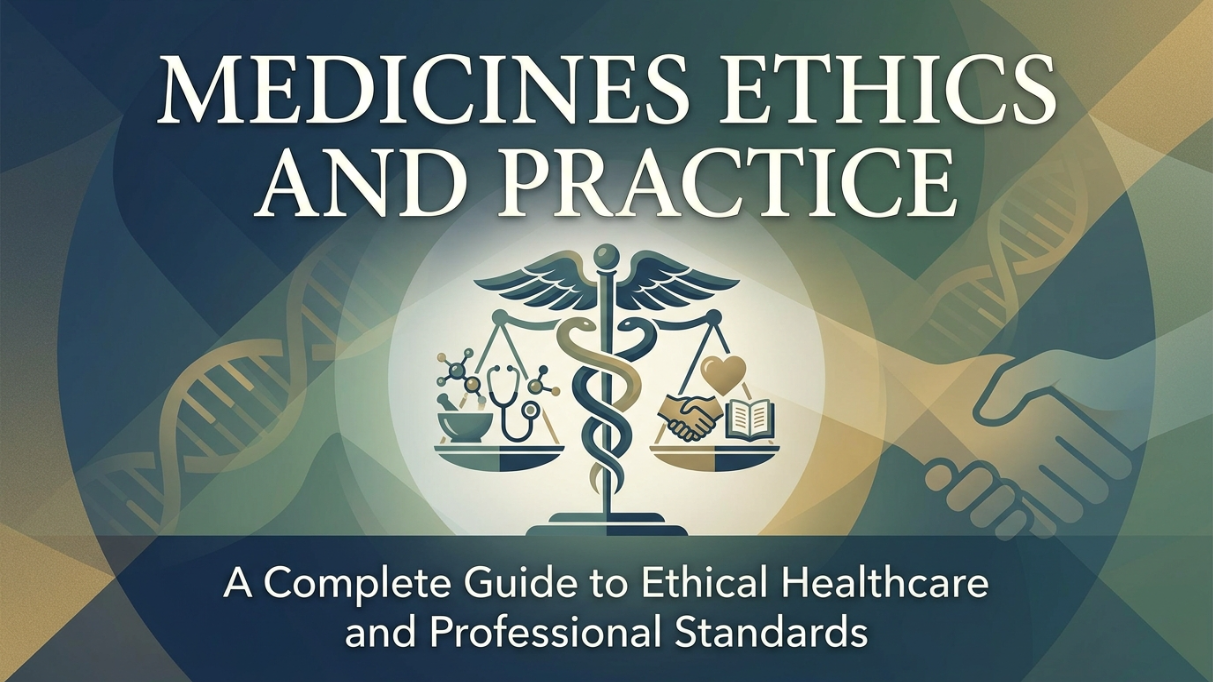

Medicines ethics and practice form the foundation of safe, responsible, and patient-centered healthcare. Every decision involving medicines has ethical implications, from prescribing and dispensing to monitoring treatment outcomes. Healthcare professionals must balance clinical knowledge with moral responsibility to ensure patients receive appropriate, safe, and effective care.
As healthcare continues to evolve through technological advancements, personalized medicine, and changing regulations, the importance of medicines ethics and practice has become even greater. Ethical decision-making protects patients, strengthens public confidence, and promotes better health outcomes while maintaining professional integrity.
Understanding Medicines Ethics and Practice
Medicines ethics and practice refer to the principles, standards, and professional responsibilities that guide the safe use of medicines in healthcare. These principles help physicians, pharmacists, nurses, and other healthcare providers make decisions that prioritize patient well-being while respecting legal and professional obligations.
Ethical practice goes beyond simply following clinical guidelines. It requires honesty, accountability, transparency, and respect for patient rights. When healthcare professionals consistently apply medicines ethics and practice, they build trust and improve the overall quality of healthcare delivery.
Core Ethical Principles
Four widely recognized ethical principles guide modern healthcare: autonomy, beneficence, non-maleficence, and justice. Respecting patient autonomy means allowing individuals to make informed decisions about their treatment after receiving accurate and understandable information.
Beneficence encourages healthcare professionals to act in the patient’s best interest, while non-maleficence emphasizes avoiding unnecessary harm. Justice focuses on fairness by ensuring equal access to appropriate medicines regardless of social or economic background.
Why Ethics Matter in Medicine
Ethical practice helps reduce medication errors, improves patient satisfaction, and strengthens relationships between healthcare providers and patients. It also supports responsible prescribing and encourages evidence-based treatment decisions.
Without strong medicines ethics and practice, healthcare systems may experience reduced public confidence, increased legal disputes, and poorer patient outcomes. Ethical standards create consistency that benefits both professionals and patients.
Professional Responsibilities
Healthcare professionals must maintain competence through continuing education, follow current clinical guidelines, and communicate clearly with patients. They should also document decisions accurately and report medication errors honestly to improve future care.
Confidentiality remains a critical responsibility. Patient information should only be shared when legally permitted or necessary for safe healthcare delivery, protecting both privacy and professional integrity.
Common Ethical Challenges
Professionals often face situations involving limited healthcare resources, informed consent, medication shortages, or conflicts between patient preferences and clinical recommendations. These challenges require careful judgment supported by ethical principles and clinical evidence.
Another common issue involves balancing innovation with safety. While new medicines may offer promising benefits, healthcare providers must carefully evaluate risks before recommending them to patients.
Best Practices for Ethical Medicine Use
Ethical medicine use begins with accurate diagnosis, evidence-based prescribing, and individualized treatment planning. Patients should understand why a medicine is prescribed, how to use it correctly, and what potential side effects to expect.
Regular medication reviews, clear communication, and collaborative decision-making help improve treatment outcomes. These practices demonstrate how medicines ethics and practice support safer healthcare every day.
Medicines Ethics and Practice at a Glance
| Ethical Principle | Practical Application | Patient Benefit |
|---|---|---|
| Autonomy | Shared decision-making | Greater patient involvement |
| Beneficence | Evidence-based treatment | Improved health outcomes |
| Non-maleficence | Preventing medication errors | Reduced risk of harm |
| Justice | Fair access to medicines | Equal healthcare opportunities |
| Confidentiality | Protecting medical records | Increased trust |
Building Patient Trust
Trust develops when healthcare professionals communicate honestly, respect patient concerns, and explain treatment options clearly. Patients who trust their providers are more likely to follow prescribed therapies and attend follow-up appointments.
Consistent medicines ethics and practice also encourages transparency when mistakes occur. Open communication allows healthcare teams to learn from errors while maintaining accountability and patient confidence.
“Ethics is knowing the difference between what you have a right to do and what is right to do.” — Potter Stewart
The Future of Ethical Healthcare
Digital health records, artificial intelligence, and telemedicine continue to reshape healthcare delivery. While these innovations improve efficiency, they also introduce new ethical questions involving privacy, data security, and algorithmic decision-making.
Healthcare organizations must continuously update policies and training programs so medicines ethics and practice remain aligned with modern technologies while preserving patient rights and professional accountability.
Conclusion
Medicines ethics and practice are essential for delivering safe, effective, and compassionate healthcare. Ethical principles help professionals make responsible decisions that protect patients, improve treatment quality, and strengthen public trust.
As medicine continues to evolve, ethical practice will remain a cornerstone of professional excellence. By combining scientific knowledge with integrity, transparency, and respect for patients, healthcare providers can create better outcomes for individuals and communities alike.
FAQ
What is medicines ethics and practice?
Medicines ethics and practice refer to the ethical principles and professional standards that guide the safe, responsible, and patient-centered use of medicines in healthcare.
Why are medicines ethics and practice important?
Medicines ethics and practice help improve patient safety, reduce medication errors, support informed decision-making, and strengthen trust between healthcare professionals and patients.
Who follows medicines ethics and practice?
Doctors, pharmacists, nurses, researchers, and other healthcare professionals apply medicines ethics and practice in their daily responsibilities.
How do ethical principles improve patient care?
Ethical principles promote fairness, respect patient autonomy, prevent harm, and encourage evidence-based treatment decisions that lead to better healthcare outcomes.
What are the biggest challenges in medicines ethics and practice?
Common challenges include informed consent, medication shortages, patient confidentiality, responsible prescribing, conflicts of interest, and balancing innovation with patient safety.
Read More: About Droven.io: Complete Guide to the Platform, Features, Benefits, and Business Value