
Smoking meat is both a science and an art, and choosing the right wood is one of the biggest factors influencing the final flavor. The best wood chips for smoking different meats aren’t simply the strongest or most popular varieties—they’re the ones that complement the natural characteristics of each protein without overpowering it.
Whether you’re preparing brisket, ribs, chicken, salmon, or lamb, understanding wood flavor profiles can dramatically improve your barbecue results. This guide explores how different hardwoods interact with various meats, explains common mistakes, and helps you confidently choose the ideal smoking wood for every cook.
Why Wood Selection Matters for Smoking Meat
The type of wood you burn creates aromatic compounds that penetrate the surface of meat during the smoking process. These compounds contribute not only to taste but also to color, aroma, bark formation, and the overall eating experience.
Finding the best wood chips for smoking different meats means balancing smoke intensity with the natural richness of the protein. Mild woods preserve delicate flavors, while stronger hardwoods enhance rich cuts that can stand up to bold smoke.
Understanding Different Wood Flavor Profiles
Each hardwood produces its own distinctive smoke. Fruitwoods like apple and cherry provide subtle sweetness, while hickory and oak create deeper, earthier flavors. Mesquite delivers an intense smokiness that should be used carefully.
Experienced pitmasters often blend woods to create more complex flavor combinations. Rather than relying on a single variety, mixing complementary woods allows greater control over sweetness, richness, and smoke intensity while producing the best wood chips for smoking different meats.
Comparison of Popular Smoking Woods
Choosing the right wood becomes much easier when you understand each variety’s characteristics and ideal applications.
| Wood Type | Smoke Strength | Flavor Profile | Best Meats | Difficulty Level |
|---|---|---|---|---|
| Hickory | Medium-Strong | Rich, smoky, bacon-like | Pork, beef | Easy |
| Oak | Medium | Balanced, earthy | Brisket, lamb, beef | Very Easy |
| Apple | Mild | Sweet, fruity | Chicken, pork, turkey | Easy |
| Cherry | Mild-Medium | Sweet, slightly tart | Poultry, pork, duck | Easy |
| Pecan | Medium | Nutty, mellow | Poultry, pork, beef | Easy |
| Maple | Mild | Sweet, delicate | Chicken, vegetables, pork | Easy |
| Mesquite | Very Strong | Bold, earthy | Beef, game meats | Advanced |
| Alder | Mild | Light, clean | Fish, seafood, poultry | Very Easy |
This comparison serves as a reliable starting point, although personal preference, regional barbecue styles, and cooking duration will influence your ideal pairing over time.
Best Wood Chips for Smoking Beef
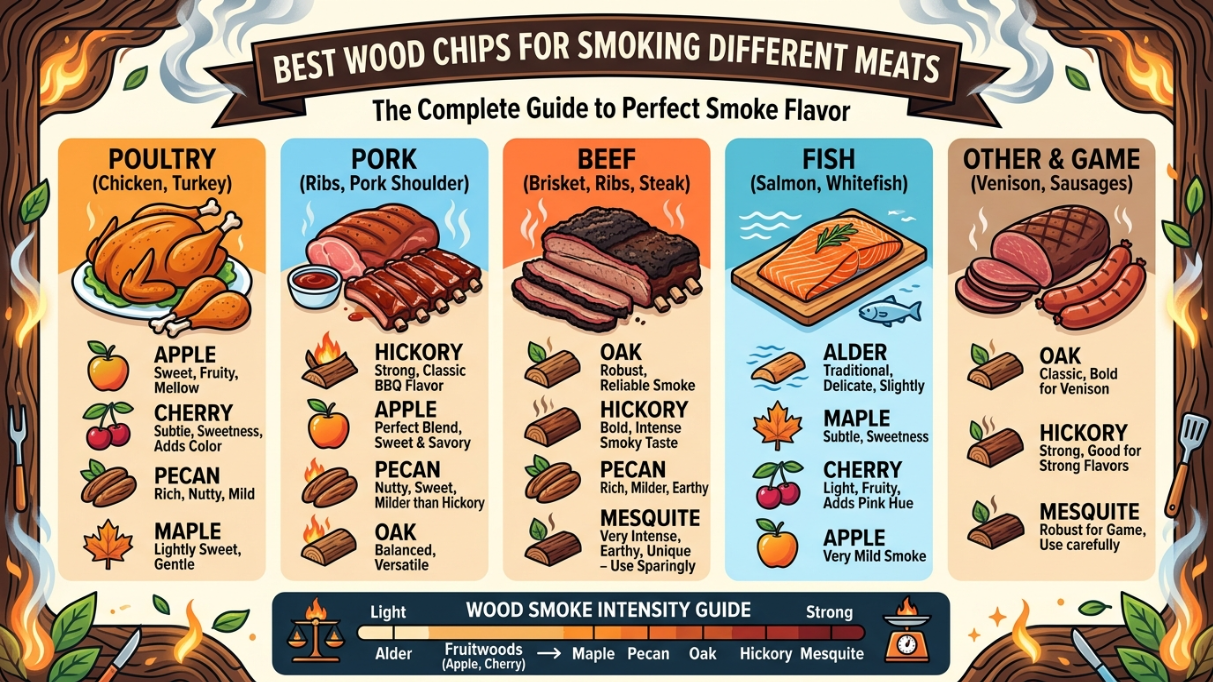
Beef benefits from woods that produce robust smoke capable of complementing its rich fat content. Oak remains one of the most versatile choices because it enhances natural beef flavor without overwhelming it, while hickory adds a deeper, traditional barbecue character.
For brisket and large beef roasts, the best wood chips for smoking different meats often include oak blended with small amounts of hickory or pecan. Mesquite also performs exceptionally well in Texas-style barbecue but should be used sparingly due to its powerful intensity.
Best Wood Chips for Smoking Pork
Pork adapts beautifully to a wide range of smoking woods because its naturally sweet flavor pairs well with both fruitwoods and stronger hardwoods. Apple and cherry remain classic choices for ribs, pork shoulder, and tenderloin because they produce balanced sweetness.
When preparing pulled pork or spare ribs, many pitmasters combine hickory with apple to create layered smoke flavor. This combination frequently ranks among the best wood chips for smoking different meats because it delivers complexity without bitterness.
Best Wood Chips for Smoking Chicken and Turkey
Poultry absorbs smoke quickly, making lighter woods the preferred choice. Apple, maple, cherry, and pecan contribute subtle sweetness while allowing the delicate flavor of chicken or turkey to remain the star of the meal.
Using overly aggressive woods can leave poultry tasting bitter, especially during longer smoking sessions. Selecting the best wood chips for smoking different meats for chicken usually means choosing restraint over intensity.
Best Wood Chips for Smoking Seafood
Seafood requires exceptionally gentle smoke because fish flesh absorbs flavor much faster than red meat. Alder has long been considered the traditional choice for salmon, while apple provides a slightly sweeter finish for shrimp and white fish.
Light smoke highlights the freshness of seafood instead of masking it. Even experienced smokers typically avoid mesquite and heavy hickory when preparing fish because these woods can easily dominate delicate flavors.
Best Wood Chips for Smoking Lamb and Game Meats
Lamb, venison, elk, and other game meats possess bold natural flavors that pair well with medium to strong hardwoods. Oak provides a dependable foundation, while pecan contributes subtle nuttiness without becoming overpowering.
Hunters often experiment with blends that include small amounts of mesquite or hickory to enhance wild game. Finding the best wood chips for smoking different meats becomes especially rewarding when matching wood intensity to the distinctive flavor of each cut.
Should You Mix Different Wood Chips?
Blending wood chips is one of the easiest ways to customize smoke flavor. Combining oak with fruitwoods creates a balanced profile that offers both sweetness and depth, making it suitable for many proteins.
Successful blends usually feature one dominant wood supported by a complementary secondary variety. This approach provides flexibility and often produces more balanced flavor than relying on a single wood throughout the entire smoking session.
Common Mistakes When Choosing Smoking Wood
One of the biggest mistakes is assuming stronger smoke always creates better barbecue. Excessive smoke can produce bitterness, overpower seasoning, and reduce the natural flavor of quality meat.
Another common error is using softwoods such as pine or cedar for smoking food. Only properly seasoned hardwoods should be used when selecting the best wood chips for smoking different meats, as they burn cleaner and produce safe, pleasant smoke.
Practical Tips for Better Smoking Results
Temperature control remains just as important as wood selection. Maintaining consistent heat allows smoke compounds to adhere evenly to the meat while preventing harsh or acrid flavors from developing.
Use wood chips gradually instead of adding excessive amounts at once. Thin blue smoke is generally considered ideal because it produces cleaner flavor and better bark than thick white smoke.
How Meat Thickness Influences Wood Choice
Thicker cuts spend longer in the smoker, giving them more time to absorb smoke flavor. Briskets and pork shoulders can therefore tolerate stronger woods that might overwhelm thinner cuts.
Smaller items such as chicken breasts, fish fillets, and pork chops benefit from lighter woods because they cook quickly. Matching smoke intensity to cooking time is another important factor when selecting the best wood chips for smoking different meats.
Modern Smoking Trends and Flavor Innovation
Today’s backyard pitmasters are experimenting with regional hardwoods, custom blends, and premium kiln-dried wood chips to achieve cleaner, more consistent smoke. Precision temperature controllers have also made it easier to repeat successful cooks.
Another growing trend involves pairing wood choice with sauces and rubs. Sweet fruitwoods often complement honey-based glazes, while oak and hickory pair naturally with pepper-forward Texas-style seasoning, creating more intentional flavor profiles.
Expert Perspective on Wood Pairing
As legendary pitmaster Aaron Franklin famously said:
“Good barbecue starts with good fire.”
This simple statement highlights an important truth. Premium meat deserves equally thoughtful wood selection, careful fire management, and patience throughout the cooking process to produce consistently outstanding barbecue.
Conclusion
Choosing the best wood chips for smoking different meats is about understanding balance rather than following rigid rules. Every hardwood contributes unique aromas and flavors that can either elevate or overpower the food, depending on how they’re used.
As you gain experience, you’ll develop favorite combinations tailored to your cooking style. Start with classic pairings such as oak for beef, apple for pork, alder for seafood, and maple for poultry, then gradually experiment with blends to create signature flavors that make every barbecue memorable.
FAQ
What are the best wood chips for smoking different meats?
The best wood chips for smoking different meats depend on the protein. Oak works well for beef, apple complements pork, alder excels with seafood, and maple or cherry are excellent choices for poultry.
Can I mix different wood chips together?
Yes. Mixing woods often creates more balanced smoke flavor. Popular combinations include oak with apple, hickory with cherry, and pecan with maple.
Should wood chips be soaked before smoking?
Most experts recommend using dry wood chips because they ignite more consistently and produce cleaner smoke. Soaking generally delays combustion rather than improving smoke quality.
Which wood should beginners start with?
Oak is one of the easiest woods to learn because it provides balanced smoke that pairs well with many meats without becoming overpowering.
Is mesquite suitable for every type of meat?
No. Mesquite produces very strong smoke and works best with beef and certain game meats. It is generally too intense for fish, poultry, and delicate cuts.
How much wood should I use during smoking?
Less is usually better. Aim for a steady stream of thin blue smoke instead of heavy white smoke, adding wood gradually throughout the cooking process for clean, balanced flavor.
Read More: What Is the Skin on a Sausage Made Of? The Complete Guide to Natural and Artificial Sausage Casings